
Education Minister Sasmit Pokharel Heckled During Curriculum Consultation in Siraha
Education Minister Sasmit Pokharel Cuts Short Speech And Leaves With Security After Being Booed And Heckled At Curriculum Consultation In Siraha
· 8 min read
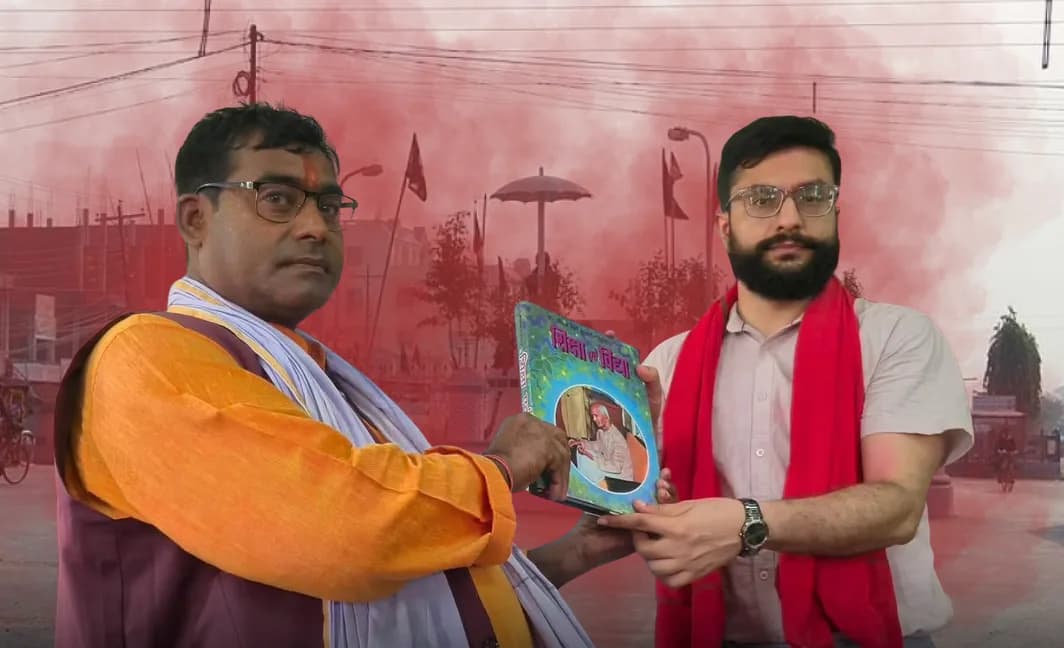
Education Minister Sasmit Pokharel faced protests and loud heckling during a curriculum consultation program in Siraha on Saturday, forcing him to cut short his speech and leave the venue with the help of security personnel.
The incident took place in Aurahi Rural Municipality during a curriculum suggestion program organised by the municipality’s Education Section. The program was intended to collect feedback from teachers, students, parents and other stakeholders as the government prepares to revise the National Curriculum Framework.

However, the consultation turned tense after local representatives raised concerns about how the event had been organised and complained that they were not given enough opportunity to speak before the minister addressed the gathering.
Local Leaders Say They Were Not Given Time to Speak
Siraha District Coordination Committee chief Dinesh Kumar Mahato said Minister Pokharel arrived at the venue nearly two hours late.
According to Mahato, the program had already started by the time the minister arrived, and Aurahi Rural Municipality chair Shivaji Yadav had already addressed the gathering.
Mahato said Pokharel was given the microphone soon after his arrival without first allowing other local representatives and stakeholders waiting at the venue to present their suggestions.
The decision angered some participants, who began raising objections from the floor while the minister was speaking.
Mahato argued that a consultation on curriculum reform should provide enough time for local stakeholders to explain their concerns and suggestions before decisions are made.
He questioned how local issues could be properly included in future curriculum changes if representatives were not given a meaningful opportunity to speak.
Protests Grow as Minister Speaks
The complaints quickly became louder after Minister Pokharel began his address.
Reports from the event described protests and heckling from participants while the minister was speaking. As the situation became increasingly tense near the stage, security personnel stepped in.
People accompanying the minister reportedly attempted to calm those raising objections, but the disagreement continued.
With the situation becoming difficult to control, Pokharel shortened his speech and decided to leave the venue. Security personnel helped clear a path for him as he exited.
The curriculum consultation program, which was supposed to focus on suggestions for education reform, instead became the centre of a dispute over how local representatives had been treated.
RSP Local Leader’s Phone Reportedly Taken
Another controversial moment involved Santosh Yadav, chairman of the Rastriya Swatantra Party in Aurahi Rural Municipality.
Yadav, who belongs to the same party as Minister Pokharel, was reportedly recording the confrontation on his mobile phone while sitting at the venue.
As the dispute intensified, his phone was taken from him. According to reports, security personnel reportedly took the phone following an instruction from someone accompanying the minister.
The incident added to tensions inside the venue.
The fact that Yadav belongs to the minister’s own party also showed that the disagreement was not limited to opposition leaders and the minister’s team.
Some people at the event viewed the taking of the phone as an attempt to prevent the confrontation from being recorded, adding another point of dispute to an already tense program.
Minister Says Two People Disrupted Event
Pokharel later issued a detailed clarification on Facebook, presenting a different account of what happened at the program.
He said his team was currently travelling across Madhesh Province to collect suggestions directly from students, teachers and parents at schools and campuses as part of plans to revise the National Curriculum Framework, 2076 BS.
Pokharel said the government wants to make Nepal’s school education more practical, skill based and suited to present needs.
He said discussions were also taking place on new ideas that could be introduced from the coming academic session, including “Book Free Friday” and “Skill in Education.”
According to Pokharel, more than 100 stakeholders took part in interactions in Siraha and Saptari, and his team was trying to hear from as many participants as possible.
However, he claimed that two individuals entered the program and created a disturbance, affecting the participation of the remaining students, teachers and parents. He said this was the reason his team left the venue.
Pokharel Says Short Video Did Not Show Full Context
Pokharel also responded to a short video of the confrontation that circulated online.
He said a clip lasting less than one minute had been cut from the incident and shared in a way that distorted the overall context and created unnecessary confusion.
The minister acknowledged that people have the right to express disagreement in a democratic system but argued that conclusions should not be made solely on the basis of a short video without understanding the complete circumstances.
He also said criticism and what he described as misleading publicity would not stop the government’s education reform work.
His comments represent the minister’s account of the incident and differ from the version given by local representatives who said the confrontation began because they were not properly heard at the program.
Minister Links Criticism to RSP’s Growing Influence
Pokharel also introduced a political explanation for the criticism surrounding the incident.
In his Facebook statement, he claimed that some people could be unhappy with what he described as the growing influence of the Rastriya Swatantra Party in Madhesh Province and positive work being carried out in the education sector.
He argued that the public should be allowed to judge the work for themselves rather than being influenced by what he described as misleading claims.
Pokharel said his team had not travelled to Madhesh for a political stunt or to create publicity but to work directly on the ground and bring what he called real and positive changes to the education sector.
The minister’s comments about RSP’s political influence and the reasons behind criticism are his own assessment and have not been established as the cause of the confrontation.
Different Accounts Emerge Over Siraha Dispute
The incident has produced competing accounts from people who were present at the program.
Mahato and other local representatives have focused on the way the event was managed. Their main complaint is that local stakeholders were not given a proper opportunity to speak before the minister took the microphone.
They have also questioned whether a consultation can effectively collect local concerns when a minister arrives late, speaks and then leaves following a dispute.
People closer to the minister, however, have blamed a small number of individuals for disrupting what they describe as a wider consultation involving students, teachers and parents.
RSP lawmaker Shiva Yadav, who was present at the program, also blamed District Coordination Committee chief Dinesh Mahato for the controversy.
The different accounts mean there remains disagreement over exactly who was responsible for turning the curriculum consultation into a confrontation.
Concerns over coordination had also reportedly emerged before the minister arrived. Some local political workers complained that the program had not been properly coordinated with them and that visiting leaders were receiving more attention than local representatives.
Those complaints suggest that tensions surrounding the event had developed before the public confrontation began.
What Was the Curriculum Consultation About?
The Siraha program was part of a wider government effort to collect public suggestions before making changes to Nepal’s school curriculum.
Minister Pokharel and his team have been visiting schools and campuses in Madhesh Province and holding discussions with students, teachers, parents and other stakeholders.
The government is seeking feedback as it prepares to revise the National Curriculum Framework, with the aim of making school education more practical and focused on skills.
Among the ideas being discussed are “Book Free Friday” and greater integration of skills into education.
According to Pokharel, the government intends to introduce the planned changes from the coming academic session.
The consultation process is intended to collect feedback from people directly involved in education before the proposed changes are finalised.
The controversy in Aurahi, however, has raised questions about whether local representatives and other stakeholders are receiving enough time and space to express their views during such programs.
Pokharel Says Team Visited 8 to 10 Schools
Pokharel said the confrontation did not stop his team’s work in Siraha.
According to his statement, after leaving the disputed program, his team visited a school serving deaf children as well as a madrasa and spoke directly with students.
He said the delegation visited around eight to ten schools that day and collected suggestions that he described as productive.
Pokharel said the team would continue its journey from Saptari towards Morang as part of the wider curriculum consultation.
Questions Remain After Siraha Confrontation
The Siraha incident has brought attention not only to the confrontation itself but also to how the government conducts its curriculum consultation programs.
There are now clearly different versions of what triggered the dispute.
Local representatives say they were not properly heard and point to the minister’s late arrival and the way the speaking opportunities were managed. Pokharel says two individuals disrupted a consultation involving more than 100 stakeholders and argues that a short viral video failed to show the full context.
The reported taking of an RSP local leader’s phone during the confrontation has added another issue to the dispute.
As the government continues consultations in other districts, attention is likely to remain on whether students, teachers, parents and local representatives are given enough opportunity to participate and whether future programs can avoid the type of confrontation seen in Aurahi.
For now, the Siraha incident remains a disputed episode, with the minister and local representatives offering different explanations of what happened and why.
Published 5 days ago in Politics