
More Than 8,300 Kathmandu Households Identified As Vulnerable Ahead Of Monsoon Season
Kathmandu Metropolitan City has approved a monsoon preparedness plan after identifying 128 flood-prone locations across the city. The plan estimates that more than 8,300 households could be affected by flooding and inundation during this year's monsoon season.
· 2 min read
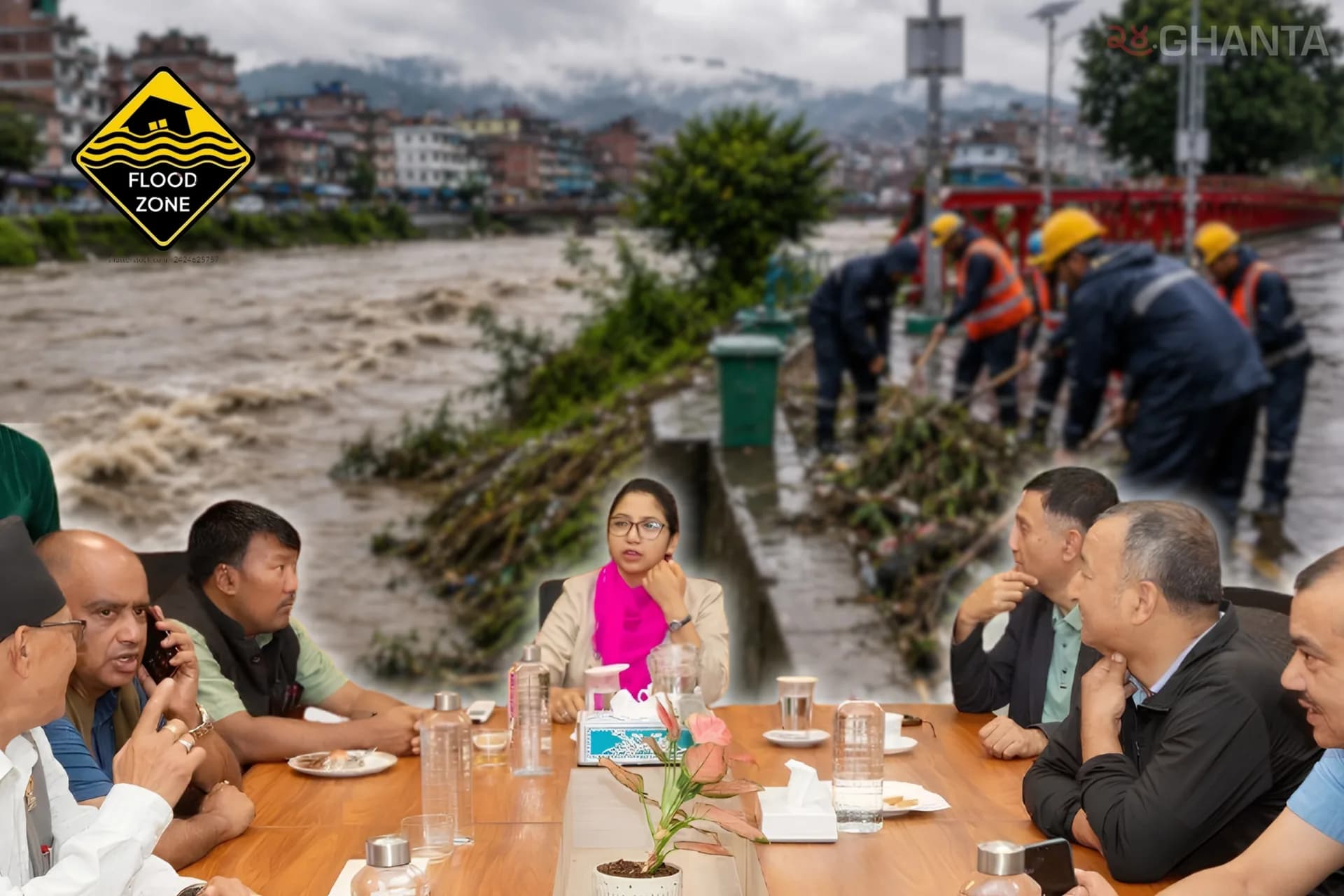
Kathmandu Metropolitan City has completed a citywide assessment of flood risks and identified more than 8,300 households that could be affected during this year's monsoon season. The findings form part of a newly approved preparedness and response framework designed to strengthen disaster management efforts across the capital.
The assessment identified 128 locations where flooding and water inundation are considered possible during periods of heavy rainfall. Based on projections from the Department of Hydrology and Meteorology, city authorities are preparing for monsoon conditions expected to continue through the end of September.

Among the areas facing the greatest concern is Ward No. 14, situated near the meeting point of the Bagmati and Bishnumati rivers. Municipal officials have also listed Wards 13, 15, 29, 10, 16, 26, 32, and 12 among the locations requiring heightened attention during the rainy season.
The largest concentration of vulnerable sites has been recorded in Ward No. 30, where 21 separate locations have been categorized as flood-prone. Wards 4 and 32 each contain 10 such locations.
While several parts of the city face varying levels of risk, officials estimate that Ward No. 16 could experience the highest impact if flooding occurs. Approximately 1,600 households in the ward may be affected by overflowing rivers and streams, including the Samakhushi and Bishnumati waterways. Significant numbers of households in Wards 26, 4, and 3 have also been included in the risk assessment.
As part of its preparedness strategy, the metropolitan city has compiled emergency contact networks involving disaster management committees, security agencies, health institutions, ambulance operators, and fire services. Municipal departments have also been assigned responsibilities covering rescue operations, relief distribution, recovery activities, and rehabilitation efforts.
To support emergency response operations, authorities have designated 87 schools, 51 parks, and 28 open spaces that can be converted into temporary shelters or relief centres if necessary.
City officials say preventive measures are already underway. Drainage channels, culverts, rivers, catch pits, and manholes are being cleaned regularly to reduce blockages before peak rainfall begins. Approximately 30 workers have been deployed daily for maintenance work aimed at improving water flow and lowering the risk of urban flooding.
The preparedness plan was endorsed by the Metropolitan Disaster Management Committee under the leadership of Acting Mayor Sunita Dangol.
Published Jun 14 in Society