
Nepal Begins Enforcing 28-Year-Old Meat Safety Law: Will Consumers Finally Get Safer Meat?
Nepal Has Officially Begun Enforcing Its 28-Year-Old Animal Slaughterhouse And Meat Inspection Act Across All 21 Local Governments Of Kathmandu Valley From November 17, 2026, Requiring Health Checks, Meat Certification And Operating Licences. Inspections And Official Stamping Have Initially Started At Three Slaughterhouses, While Authorities Prepare To Expand Enforcement Across Meat Shops And Eventually Throughout Nepal.
· 4 min read
Kathmandu, November 17, 2026
Government Begins Long-Awaited Meat Safety Enforcement
The Government of Nepal, through the Department of Livestock Services and local authorities, has officially begun implementing the Animal Slaughterhouse and Meat Inspection Act, 2055, across all 21 local governments of Kathmandu, Lalitpur and Bhaktapur from November 17, 2026. The nearly three-decade-old law requires animals to undergo health examinations and meat to receive official inspection and certification before commercial sale. The move aims to prevent unsafe meat from reaching consumers, improve hygiene standards and strengthen public health protection across Kathmandu Valley.
What Changes For Meat Buyers And Sellers?
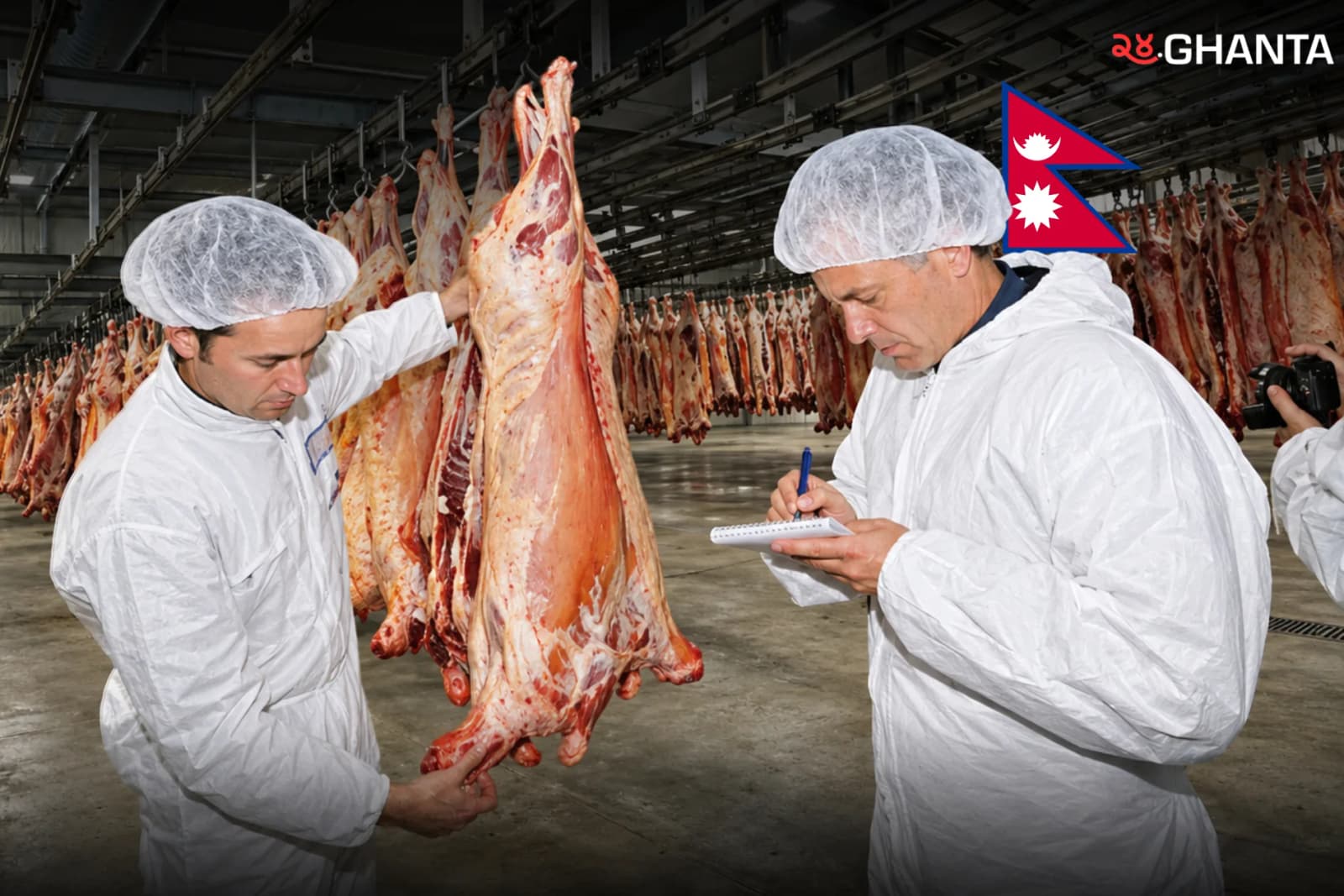
Under the law, animals must undergo a health examination before slaughter to ensure they are suitable for human consumption. After slaughter, authorised meat inspectors must examine the meat again to determine whether it is safe to eat. Only meat that passes the required checks can receive an official inspection stamp and be approved for commercial sale. Slaughterhouses and meat shops must also obtain operating licences from the relevant government authorities.

Three Slaughterhouses Begin Official Inspection
The Department of Livestock Services has started inspection and meat-stamping operations at three facilities: Valley Cold Store in Kathmandu, New Panchakanya Slaughterhouse in Madhyapur Thimi, Bhaktapur, and Everest Pig Slaughterhouse in Lalitpur. These facilities mark the beginning of practical enforcement, rather than immediate full implementation across every meat shop in Kathmandu Valley.
Strict Rules Against Unsafe And Adulterated Meat
The legislation prohibits selling meat from diseased animals or animals that died naturally. It also bans deliberately mixing different animal meats to mislead customers and adding substances that alter the meat's natural quality, taste or weight. Inspectors can seize meat considered unsafe or unsuitable for consumption and stop its sale. Depending on the violation and whether the offence is repeated, penalties can include fines of up to Rs 20,000, imprisonment of up to three months, or both.
240 Meat Inspectors Prepared For Enforcement
The Department of Livestock Services has trained 240 meat inspectors for Kathmandu Valley, including 147 in Kathmandu, 58 in Lalitpur and 35 in Bhaktapur. The inspectors will be responsible for examining animals before slaughter, checking meat quality afterward and supporting the official certification process. Special monitoring teams have also been prepared to help coordinate enforcement and maintain inspection standards.
Full Implementation Still Faces Challenges
Although the law officially takes effect across all 21 local governments on November 17, its practical enforcement remains limited in the initial stage. Authorities are still working on supervisor appointments, designated slaughter locations and coordination with local governments. The department expects inspection procedures to expand after these arrangements are completed and aims to make officially inspected and stamped meat available across Kathmandu Valley shops within approximately five to six months.
Nationwide Expansion Planned In Phases
Following the Kathmandu Valley rollout, the government plans to extend implementation to metropolitan cities, sub-metropolitan cities and municipalities outside the valley from Magh 1, 2083. The remaining rural municipalities are scheduled to come under the inspection system from Shrawan 1, 2084. The phased approach is intended to allow local authorities and meat businesses to prepare the necessary inspection facilities, licensing systems and monitoring arrangements.
What Consumers Should Know Before Buying Meat
The new system introduces an official way for customers to identify meat that has undergone government-required safety checks. Consumers should look for inspection stamps and purchase from properly licensed businesses. However, because inspections have begun at only a limited number of facilities, officially stamped meat may not yet be available at every shop. Buyers should continue checking meat freshness, storage conditions and general hygiene rather than relying solely on certification.
A Major Step Towards Safer Meat In Nepal
The enforcement of the long-delayed legislation represents an important step towards improving food safety and accountability in Nepal's meat industry. However, its real success will depend on consistent inspections, sufficient slaughterhouse facilities, effective supervision, and cooperation from meat businesses. While the law has formally entered implementation, the coming months will determine whether stronger regulations result in safer meat for consumers.
Published 11 hours ago in Health