
Nepal Moves To End One-Year Divorce Waiting Period Under Major Civil Code Reform
Nepal has proposed removing the mandatory one-year waiting period for divorce, allowing courts to grant divorce sooner if reconciliation is impossible and both spouses agree. The amendment bill also includes changes to property rights, inheritance rules, and divorce application procedures.
· 5 min read
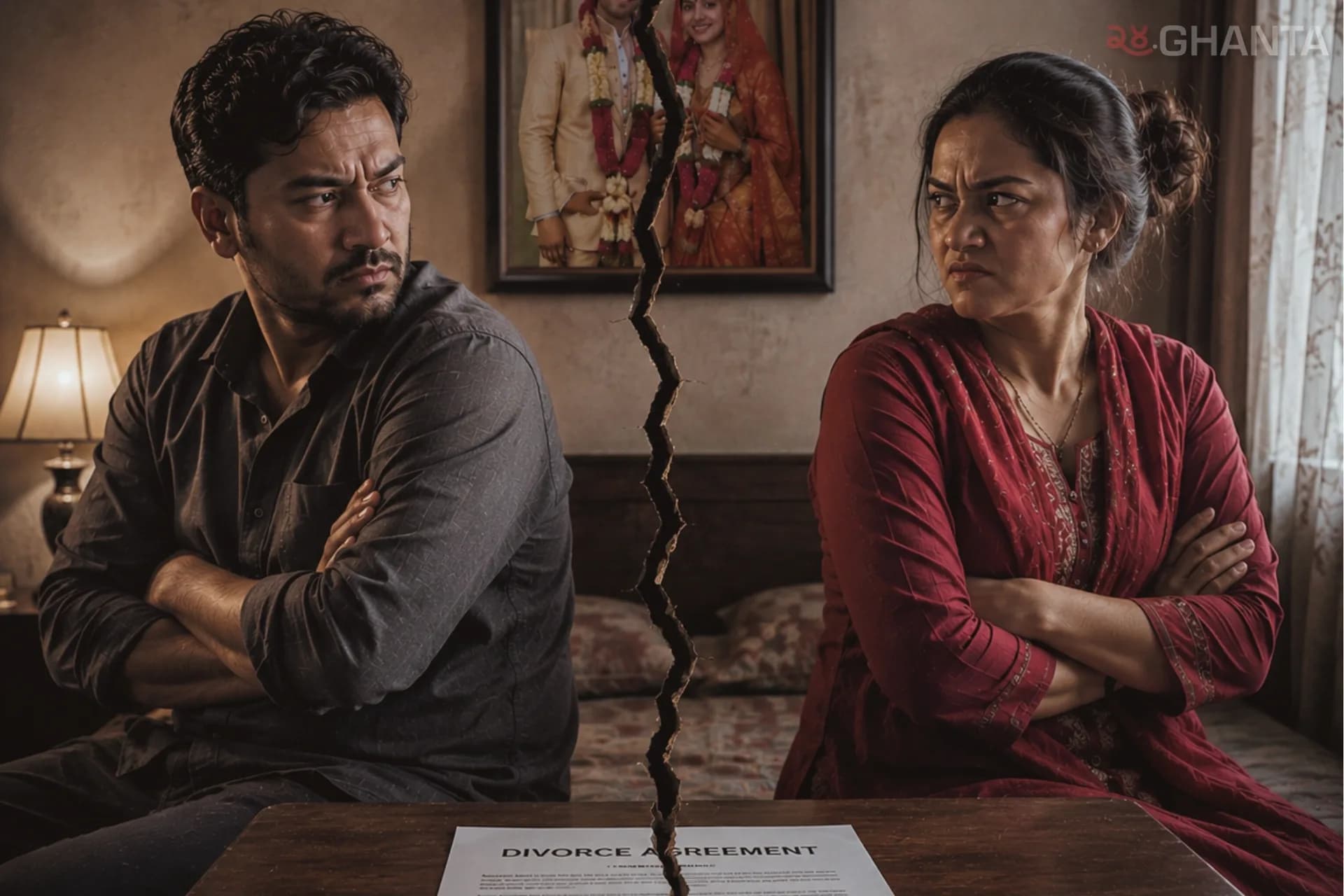
The Government of Nepal, through the Ministry of Law, Justice and Parliamentary Affairs, has proposed a major amendment to the Muluki Civil Code, 2074, seeking to remove the mandatory one-year waiting period for divorce. The proposal, made public in Kathmandu on June 23, 2026 (9 Asar 2083), would allow courts across Nepal to grant divorces sooner when reconciliation efforts have failed, and a judge determines that the marriage cannot realistically continue. The government says the change is intended to modernize family law, reduce unnecessary legal delays, and better reflect the needs of couples who have already decided to separate.

If the amendment is approved by Parliament, courts will be able to grant a divorce without forcing couples to wait for a year, provided that reconciliation efforts have failed and the judge determines that the marriage cannot realistically continue. The proposal represents one of the most important reforms to Nepal's family law system since the Civil Code came into effect in 2018.
The proposed amendment has been introduced by the Government of Nepal, specifically through the Ministry of Law, Justice and Parliamentary Affairs.
The changes will directly affect:
Married couples seeking divorce
District Courts handling family disputes
Judges responsible for reconciliation proceedings
Individuals involved in property and inheritance disputes
What Is Changing?
Under the current law, when a husband or wife files for divorce, the court must first attempt to reconcile the couple. If reconciliation fails, the law requires the parties to wait one full year before the court can formally dissolve the marriage.
The amendment seeks to remove this requirement entirely.
If the bill becomes law:
Courts will no longer be required to wait one year before granting a divorce.
A divorce may be approved sooner if reconciliation is unsuccessful.
Both husband and wife may jointly apply for divorce.
Judges will have greater flexibility to decide cases based on the actual circumstances of the marriage.
In practical terms, couples who have already agreed to separate would no longer have to remain legally married for an additional year simply because of a procedural requirement.
When?
The proposal was made public on 9 Asar 2083 (June 23, 2026).
However, the change has not yet become law. It must first:
Be discussed in Parliament.
Be approved by both houses.
Receive final authentication before taking effect nationwide.
The amendment was prepared in Kathmandu by the Ministry of Law, Justice and Parliamentary Affairs and, if enacted, will apply across all courts in Nepal dealing with divorce cases.
Why Does The Government Want To Remove The Waiting Period?
The existing one-year "cooling-off period" was introduced when the Civil Code came into force in 2075 BS (2018 AD).
The purpose of the rule was to give couples time to reconsider their decision and potentially save their marriage. Lawmakers believed that some disputes arose from temporary anger, misunderstandings, or emotional reactions that could be resolved through mediation and time.
According to legal experts involved in drafting the Civil Code, the provision was designed around the belief that marital disputes are often temporary and that couples should be given sufficient time to reconcile before permanently ending their relationship.
However, supporters of the new amendment argue that forcing couples to wait an additional year can:
Prolong emotional stress.
Increase legal expenses.
Delay property settlements.
Extend family conflicts.
Restrict the personal freedom of individuals who have already decided to separate.
The proposal reflects a growing view that marriage should be treated as a partnership between two individuals and that when both parties agree the relationship has ended, unnecessary legal delays should be avoided.
Historical Background
Before the introduction of the Civil Code in 2018, divorce procedures differed between men and women.
Women generally had greater flexibility to approach the court directly for divorce, while men often had to complete additional procedural requirements, including local-level reconciliation efforts and waiting periods.
The Civil Code introduced a more uniform system that applied similar rules to both spouses. The one-year cooling-off period became mandatory for everyone after a divorce petition was filed and reconciliation attempts had failed.
The latest amendment proposal seeks to revise that approach once again.
Additional Changes Included In The Bill
The proposed legislation goes beyond divorce procedures and introduces several other important reforms.
Stronger Property Protection During Divorce
The bill proposes stricter penalties for spouses who intentionally hide assets during divorce proceedings.
If a court determines that a spouse deliberately failed to disclose property in order to deny the other party a fair share, the court may award the affected spouse up to 10 percent of the offender's property share as compensation.
Longer Deadline For Property Disputes
The time limit for filing complaints related to property-use disputes would increase from six months to one year, giving individuals more time to seek legal remedies.
Changes To Inheritance Rights
The bill also proposes changes to inheritance rules.
Under current law, a married daughter who is not living in a joint family does not receive priority status in the order of inheritance in certain situations.
The amendment would place married daughters within the priority order of legal heirs, strengthening inheritance rights and promoting greater equality in succession matters.
What Happens Next?
The amendment bill must now pass through Nepal's parliamentary process before it can become law.
If approved, Nepal's divorce system would shift away from the mandatory one-year waiting period that has existed since 2018. Courts would be able to make faster decisions in cases where reconciliation is clearly impossible, while still retaining the authority to encourage mediation and settlement whenever appropriate.
The proposal signals a broader effort to modernize family law, simplify legal procedures, and address changing social attitudes toward marriage, divorce, property rights, and inheritance in Nepal.
Published Jun 23 in Society