
Nepal Declares Ram-Janaki Temple Area a Protected Monument Zone in Push for UNESCO World Heritage Status
The Nepal government has officially declared the Ram-Janaki Temple area in Janakpurdham a Protected Monument Zone, setting defined boundaries around the historic religious area and bringing development inside the zone under stricter heritage-protection rules. The decision is also an important step in Nepal’s long-running effort to strengthen the case for Janaki Temple’s future inclusion on UNESCO’s World Heritage List.
· 4 min read
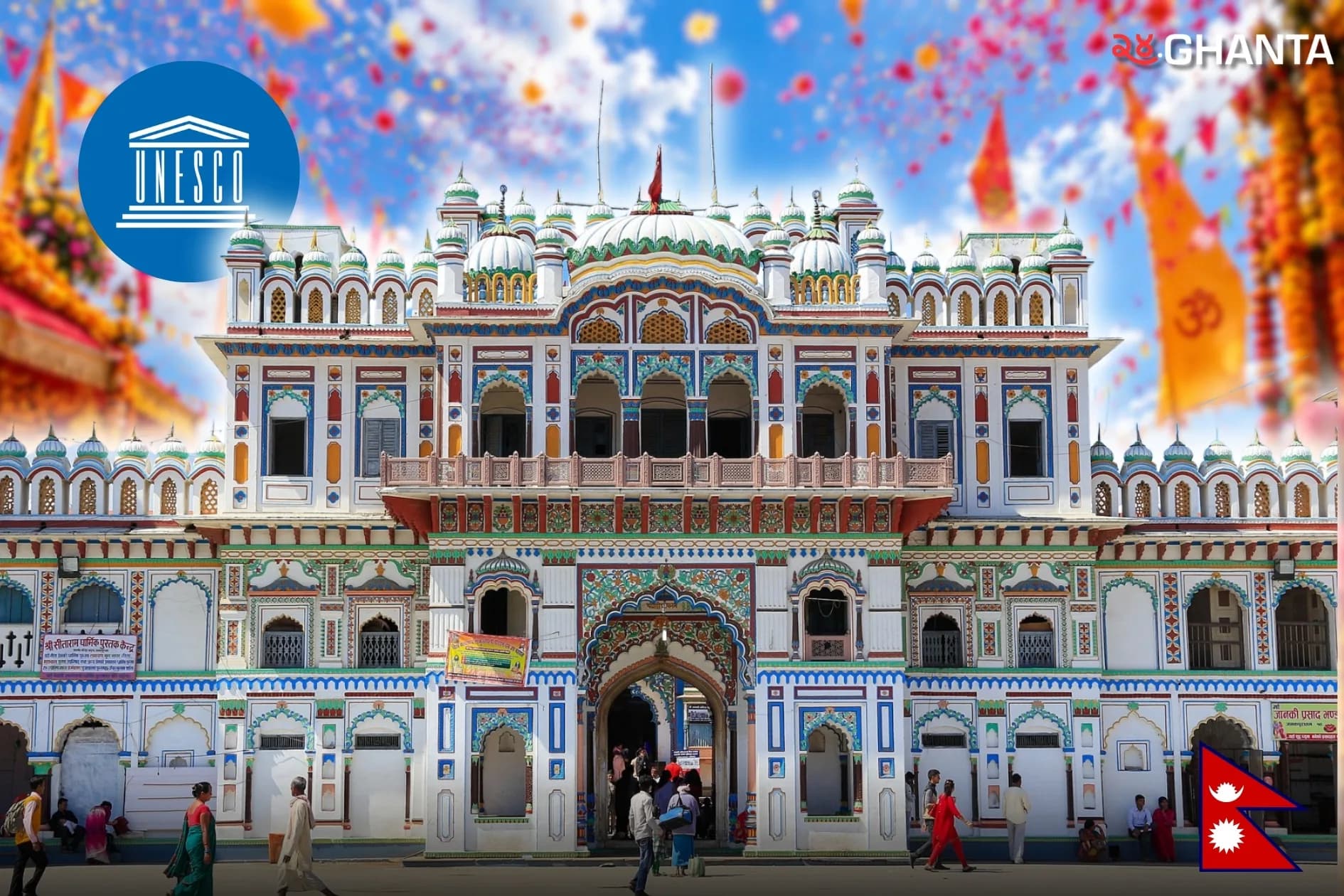
KATHMANDU, September 18, 2026
Ram-Janaki Temple Area Gets Protected Status
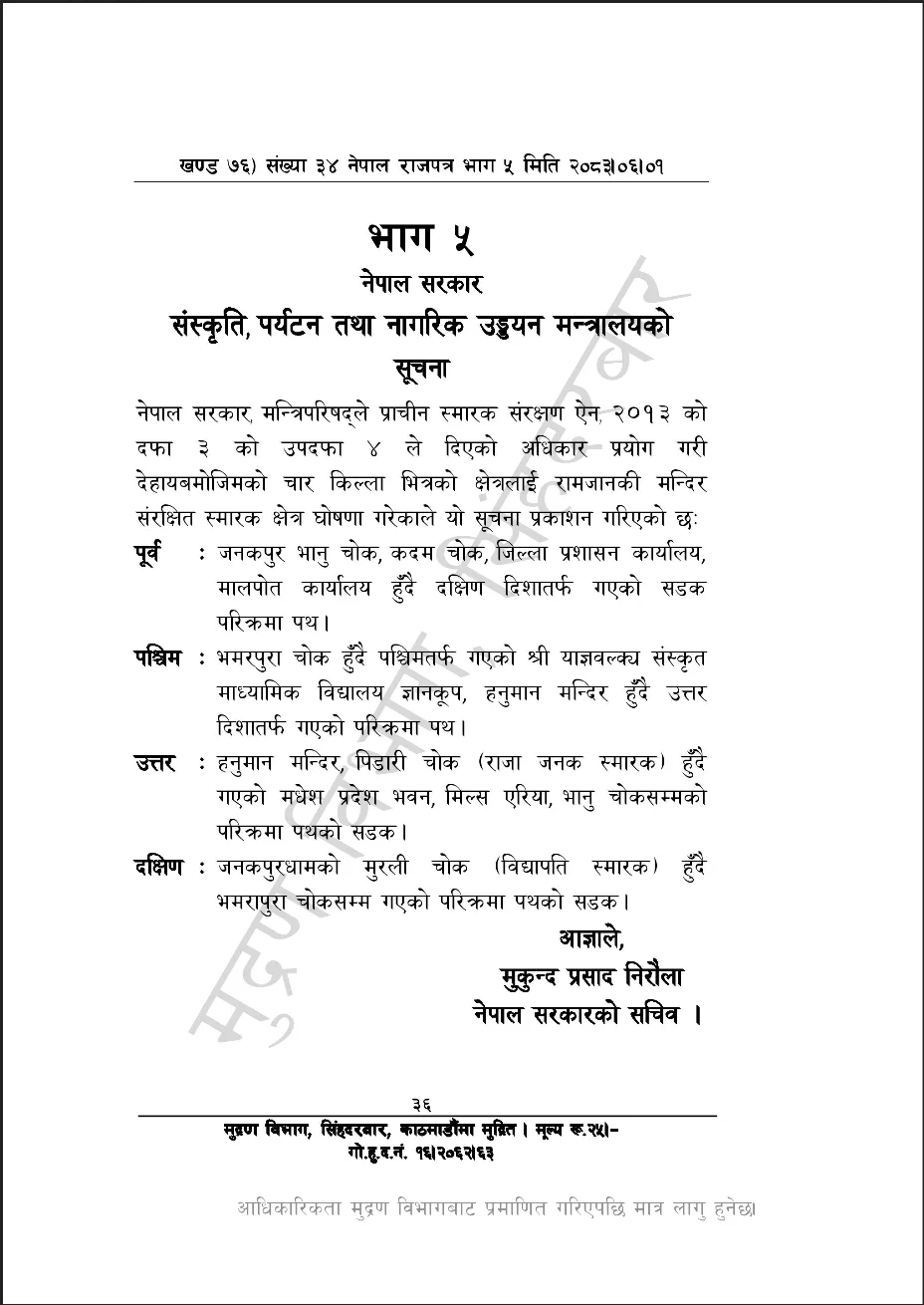
The Nepal government has officially declared the Ram-Janaki Temple area in Janakpurdham, Dhanusha, a Protected Monument Zone, with the decision published in the Nepal Gazette on September 17 under the Ancient Monument Preservation Act, 2013 B.S. The government has defined boundaries around the heritage area to strengthen the protection of its religious, historical and architectural significance, while the move also supports Nepal’s long-running effort to advance Janaki Temple toward UNESCO World Heritage status.

Government Defines Protected Boundaries
The government has identified specific boundaries around the Ram-Janaki Temple heritage area rather than limiting the protection only to the main Janaki Temple building.
According to the Ministry of Culture, Tourism and Civil Aviation, the protected area has been established by defining its boundaries and the roads forming the Parikrama route.
The designated area extends through important locations around Janakpurdham, including Bhanu Chowk, Kadam Chowk, the District Administration Office and Land Revenue Office area, Hanuman Temple, Pidari Chowk, the Madhesh Province government building area, Mills Area, Murali Chowk and Bhamarpura Chowk.
What Does Protected Monument Status Mean?
The declaration gives the area a stronger legal framework for heritage conservation.
Under Nepal’s Ancient Monument Preservation Act, activities within a Protected Monument Zone can be subject to approval and heritage standards. The Department of Archaeology has authority over conservation requirements and can establish rules governing construction and other activities that could affect protected heritage.
This means development around the protected area cannot necessarily proceed in the same way as development outside a heritage zone.
Construction Will Face Heritage Rules
One of the most significant effects will be on construction and infrastructure activities inside the designated area.
The Department of Archaeology states that prior approval is required for activities within Protected Monument Zones, while building bylaws and conservation standards can be applied to protect the character of heritage areas.
Under the Ancient Monument Preservation Act, approval can also be required for activities such as road construction or repairs, digging for water or sewer lines, installing telephone or electricity lines, filming, holding fairs or performances, parking vehicles and putting up posters within a protected zone.
Why Has Nepal Taken This Step?
The declaration is closely connected with Nepal’s ambition to secure greater international recognition for Janaki Temple and Janakpurdham’s cultural heritage.
Janaki Temple is already included on Nepal’s UNESCO World Heritage Tentative List, but being on the tentative list is not the same as being a UNESCO World Heritage Site.
Nepal still needs to complete conservation planning, technical documentation, management arrangements and other requirements before a formal World Heritage nomination can move forward.
Declaring the surrounding heritage area a Protected Monument Zone provides a stronger domestic conservation framework for that process.
A UNESCO Goal Years in the Making
Nepal’s effort to gain World Heritage recognition for Janaki Temple is not new.
The temple has been on Nepal’s World Heritage Tentative List since 2008, but efforts to advance it toward full inscription have remained incomplete for years.
Heritage experts have previously pointed to the need for stronger conservation planning, technical studies, documentation, management systems and coordination between different levels of government.
The government has also included the goal of pursuing World Heritage recognition for Janaki Temple in the current fiscal year’s budget.
More Than Just the Main Temple
The wider Janakpurdham heritage landscape contains numerous sites connected with the city’s religious, cultural and historical identity.
During preparations for protected status, authorities worked on documenting heritage structures including temples, monasteries, ponds, traditional rest houses and other historically significant sites.
Earlier preparations included heritage locations such as Janaki Temple, Ram Mandir, Ganga Sagar, Ratna Sagar and Kumeshwar Sattal, reflecting the broader cultural landscape surrounding the main temple.
Why Janaki Temple Matters
Located in Janakpurdham, Janaki Temple is one of Nepal’s most important Hindu religious landmarks and is closely associated with Goddess Sita, also known as Janaki, and the Ramayana tradition.
The present temple was constructed in the early 20th century and is widely known as the Nau Lakha Mandir. Its distinctive architecture, religious importance and connection with the ancient Mithila region have made it one of Janakpurdham’s defining landmarks.
The temple also plays an important role in religious and cultural connections between Nepal and India, attracting large numbers of pilgrims during festivals and religious celebrations.
What Happens Next?
Protected Monument Zone status does not mean Janaki Temple has now become a UNESCO World Heritage Site.
Instead, it strengthens the legal protection of the surrounding heritage area and provides a framework for regulating development that could affect its historical and architectural character.
Nepal will still need to complete additional technical, conservation and nomination requirements if it wants Janaki Temple to move from UNESCO’s Tentative List to the World Heritage List.
For Janakpurdham, however, the official protected status represents a significant step toward preserving its historic landscape while pursuing wider international recognition.
Published 16 mins ago in Nepal